
Nothing wasted
I come from a family that aren’t very good at throwing things out.
My grandparents lived in the same house most of their married life. They had a tin of dried egg powder from World War II which they had kept for ‘emergencies’ and they a had small brown envelope labelled ‘string too short’. They came from a generation that wrote letters and squeezed as much writing onto the page, writing around the margins rather than start a new page. They thrifted to make best use of materials valuing the resources and aware of the cost.
I was inspired to have a go at darning after listening to a museum conservator talking about visible mending. I have also been trying to re-use old clothes that don’t fit adjusting them so that I can wear them or taking apart to make something else. I love clearing out and sorting but there’s a part of me that keeps things with stories. I own the WWII tin of dried egg, as well as odd silver spoons and trinkets brought back from abroad by members of the family who worked in India or China in the early 1900s.
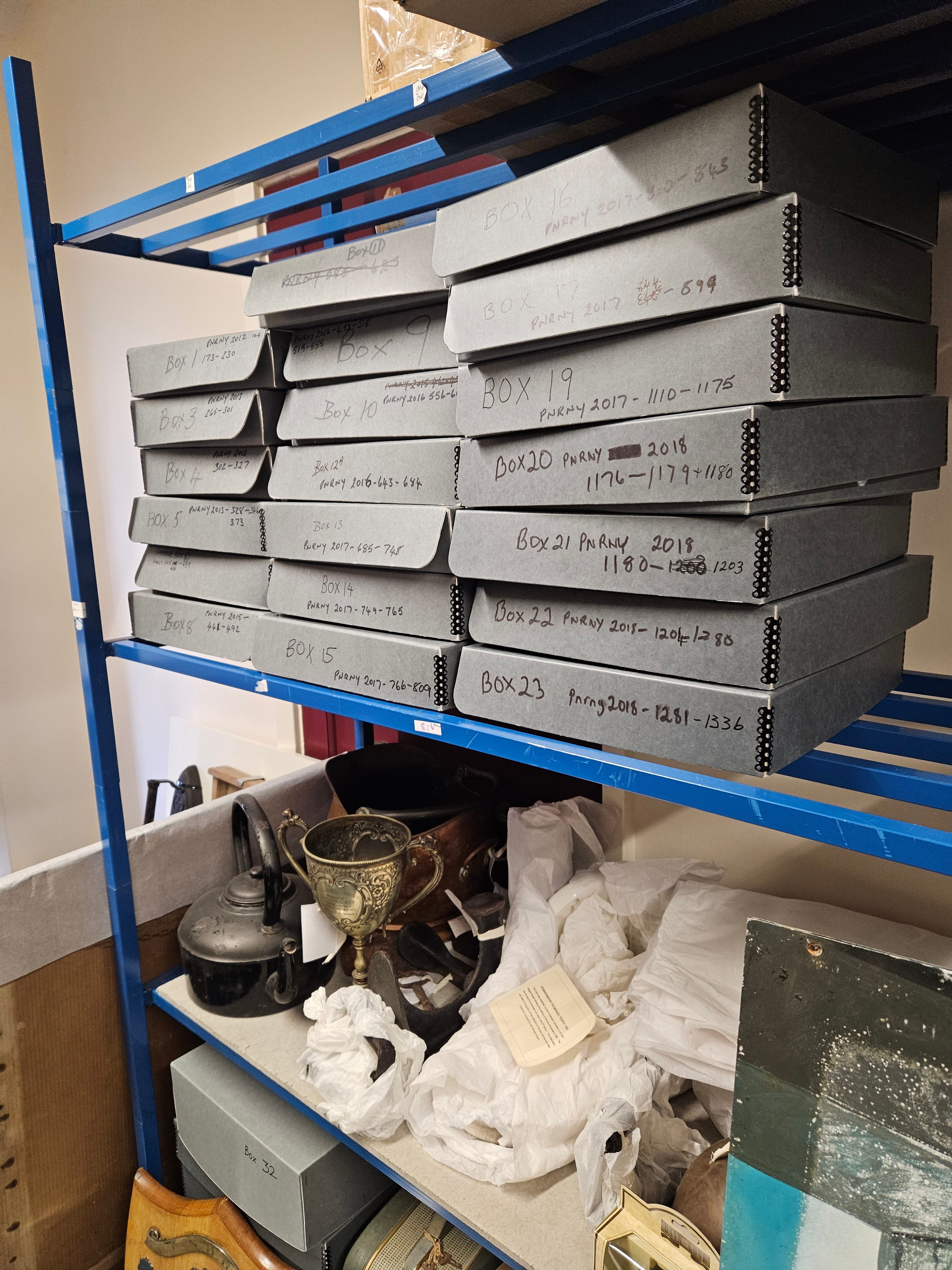
Many museums have been considering what to do with unwanted objects. It’s a little more complicated than a bit of re-making because objects accepted by museums are taken with responsibility and if later curators don’t like items or find them worthless it’s not just a matter of throwing them out. A careful process has to be followed, donors contacted and items offered to other museums. Many museums had a wealth of acquisitions during the 1980s and 90s, curators tried to keep up with changing technology acquiring vacuum cleaners and telephones. Curators today are less likely to collect contemporary items concerned about future storage and aware that the materiality of life today makes these decisions difficult.